AI dictation tools, and the speed claim behind them
The three-times-faster figure everyone quotes comes from a real controlled study. Here is what it measured, where it stops applying, and how to actually draft by voice.
6 minute read

The claim, and the study underneath it
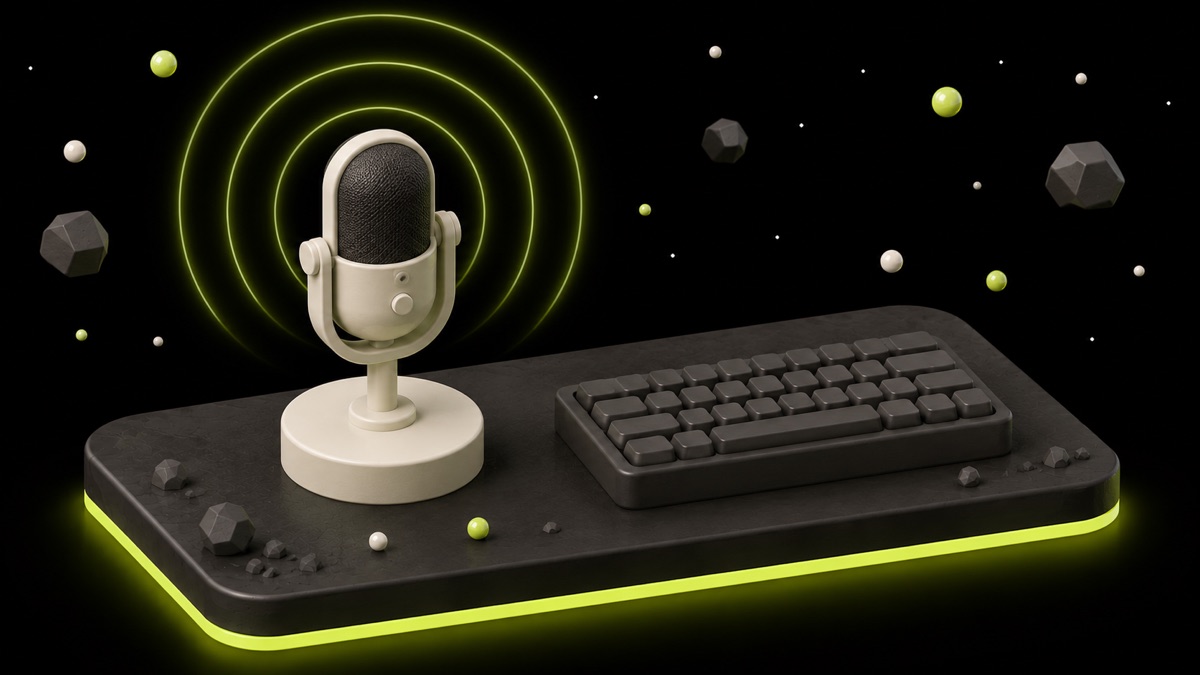
The three-times-faster line is repeated everywhere, usually with no source. It does have one. A Stanford team — Sherry Ruan, Jacob Wobbrock, Kenny Liou, Andrew Ng and James Landay — ran a controlled comparison of speech recognition against the iOS keyboard for short-message text entry. In English, speech was about three times faster than typing and the error rate was 20.4% lower. In Mandarin Chinese, speech was 2.8 times faster with an error rate 63.4% lower. That is a real, replicable result, and it is the reason dictation keeps coming back despite decades of false starts.
What the study did not measure
It measured short messages. That matters, because the advantage does not scale linearly to long-form. Dictating a two-sentence reply is close to pure gain. Dictating a 900-word script means dictating the punctuation, catching the words the model heard wrong, and doing a structural edit that you would have done inline while typing. The speed advantage is real at the input stage and shrinks as the editing burden grows. Treat the three-times figure as an upper bound that applies to the parts of your writing that look like messages — replies, captions, notes, first drafts of a hook — rather than to everything you write.

Dictation is not transcription, and the tools differ
These get conflated constantly. Transcription runs after the fact on recorded audio and is judged on word error rate across accents, crosstalk and jargon — that is the job our transcription guide covers. Dictation runs live while you compose, and is judged on latency, whether it handles you saying "comma" and "new paragraph", whether it survives you changing your mind mid-sentence, and whether it works in every text field on your machine rather than only in its own app. A tool with excellent benchmark accuracy and 800ms of latency is a fine transcriber and a miserable dictation tool.
What to judge a dictation tool on
Four things, in order. Latency first: if the words do not keep up with you, the speed advantage is gone and you will drift back to the keyboard within a week. System-wide input second — a dictation tool that only works inside its own editor makes you paste, and pasting is where the time goes. Handling of self-correction third: you will restate half your sentences, and a good tool lets you say the fixed version rather than reaching for the mouse. Vocabulary last, but it matters if your niche has proper nouns; anything that lets you add custom terms will beat a more accurate general model on your specific work.
Where it actually pays off for creators
The honest use cases are the ones with volume and low stakes per unit. Replying to comments and DMs, where you are writing dozens of short things and speech is closest to the measured advantage. Getting a first pass of a script out of your head, where the goal is raw material rather than finished prose. Writing the alt text, the descriptions, the platform-by-platform caption variants — the admin layer of publishing. What it does not do is make you a faster thinker, and if the bottleneck in your week is deciding what to say, a faster input method will not touch it.
A two-week test that settles it
Pick the highest-volume, lowest-stakes writing you do — comment replies is usually the answer — and do it by voice for two weeks. Do not start with your most important writing, because the friction of learning the tool will be attributed to the tool rather than to the learning. If it sticks on the easy surface, it will spread on its own. If it does not stick there, it will not stick anywhere, and you have saved yourself a subscription.
FAQ
Is dictation actually faster than typing?
For short messages, yes — a Stanford controlled study measured speech at about three times the speed of smartphone typing in English, with a 20.4% lower error rate. The advantage narrows for long-form writing, where dictating punctuation and repairing misheard words eats into the gain.
What is the difference between dictation and transcription tools?
Transcription processes recorded audio after the fact and is judged on word error rate. Dictation runs live as you compose and is judged on latency, system-wide availability, and how well it handles self-correction and punctuation commands.
Does dictation work for writing video scripts?
It works well for the first pass, where you want raw material rather than finished prose. Expect to do a structural edit afterwards that you would otherwise have done while typing.
Sources
- Stanford study: speech recognition is three times faster than typing on smartphones · Stanford University
- Comparing Speech and Keyboard Text Entry for Short Messages in Two Languages on Touchscreen Phones · Proc. ACM IMWUT (Ruan, Wobbrock, Liou, Ng, Landay)